An AI chatbot is a computer programme that uses artificial intelligence to have conversations with users. You ask a question in plain language and the chatbot provides an answer, without having to go through a menu or call an employee. Well-known examples are ChatGPT, Claude and the chat assistants on company websites.
What exactly is an AI chatbot?
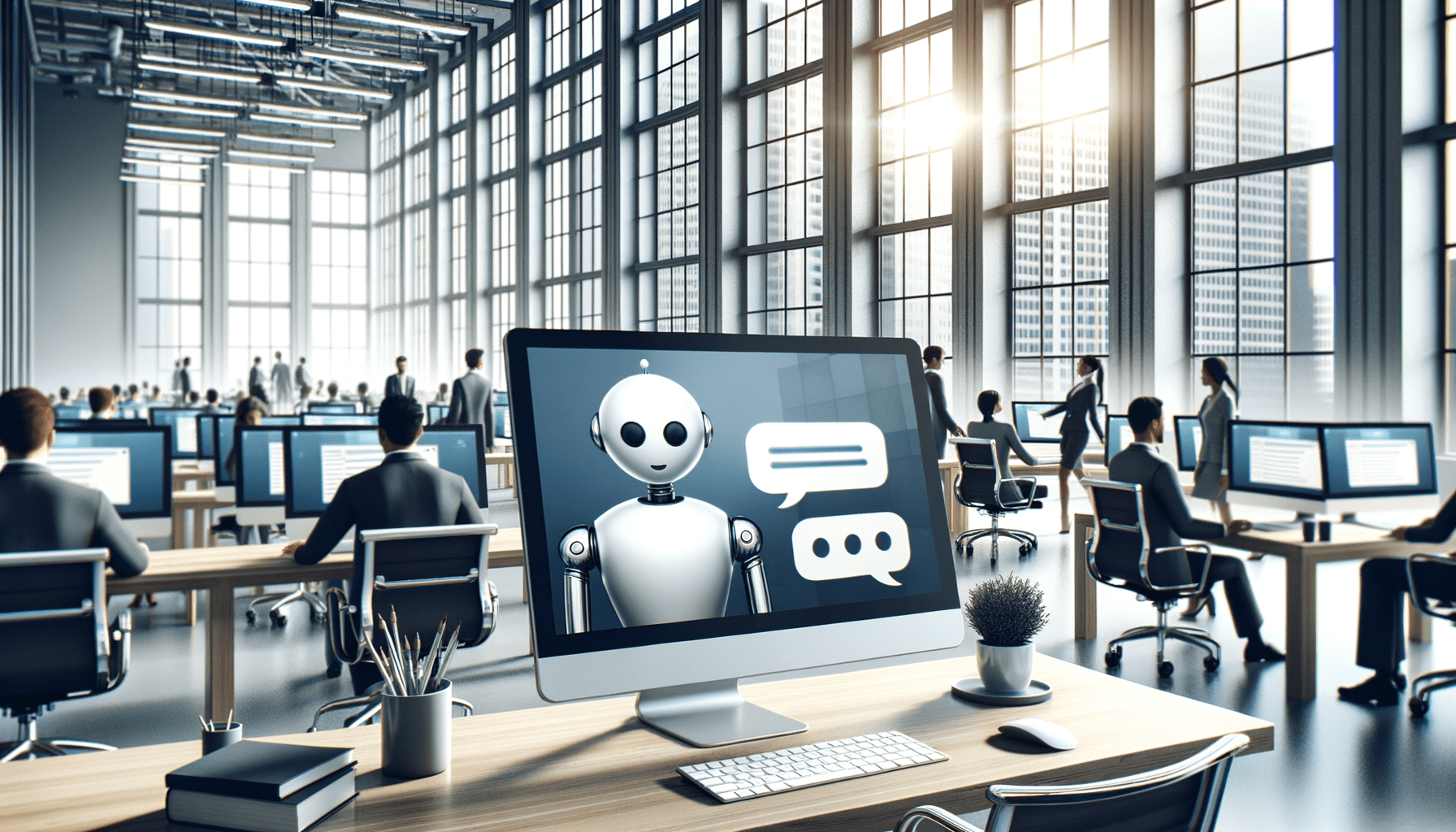
An AI chatbot simulates human conversations via text or speech. Integrated into platforms such as websites, apps or messaging services, the system responds to questions and instructions in plain language. Unlike traditional drop-down menus and forms, an AI chatbot processes open input: you do not need to know which keywords the system recognises.
The difference with a regular chatbot is that an AI chatbot learns from data and adapts to context. A traditional chatbot only responds to pre-programmed scenarios. An AI chatbot can deal with variation in language use, unexpected questions and changing conversational contexts.
AI chatbots are being used for customer service, internal help desks, HR support, sales assistance and information delivery. The common denominator is that they handle a high volume of repetitive queries without the need for an employee to be available for each query.
What are the types of AI chatbots?
There are two main types. Rule-based chatbots work with pre-programmed rules and recognise specific keywords or phrases. They can only respond to scenarios for which they are programmed. If a query arises outside those scenarios, the system crashes or refers to a staff member.
AI-driven chatbots use machine learning and natural language processing. They learn from conversations, recognise intent behind a question and can deal with variations in wording. “When will my order be delivered?” and “How long will shipping take?” are recognised by an AI chatbot as the same question, even if the words are different.
Most chatbots encountered by professionals today are AI-driven. The generative AI models that form the basis of tools like ChatGPT are making this type of chatbot increasingly powerful and widely deployable. You can read more about how generative AI works in our article on what generative AI is.
How does an AI chatbot work technically?
An AI chatbot processes your input through a combination of natural language processing and machine learning. The system analyses your text, recognises the intention behind your question and generates an appropriate response based on what it has learned during training.
In advanced chatbots based on large language models, such as ChatGPT, this goes further. The system processes the entire conversation context, not just the last sentence. This allows it to understand follow-up questions, bring previous answers into the conversation and recognise nuance in the wording of a question.
An AI chatbot learns from training data, not from your individual conversations in real time. The model you use today is trained on data up to a certain date. This explains why chatbots sometimes give outdated information or cannot answer questions about recent events. How this learning process works technically, explains our article on how AI works from.
What are companies using an AI chatbot for?
The most common application is customer service: an AI chatbot answers frequently asked questions, helps track orders, processes simple requests and refers more complex questions to a staff member. The system is available outside office hours and handles multiple calls simultaneously.
Within organisations, AI chatbots are being used for internal help desks, employee HR questions and unlocking internal knowledge bases. An employee who wants to know what leave policy applies can ask a question to an internal chatbot instead of calling an HR employee.
For professionals working with AI tools themselves, it is ChatGPT the most widely used AI chatbot. The distinction with enterprise chatbots is that ChatGPT is a generalist model, while enterprise chatbots are usually trained or tuned to specific business data and processes.
What are the benefits of an AI chatbot?
The main advantage is availability: an AI chatbot works 24/7 without pause and handles multiple calls simultaneously. This makes it scalable for organisations that want to handle a high volume of repetitive queries without employing proportionately more staff.
For professionals using AI chatbots as a working tool, speed is the biggest advantage. A question that normally takes minutes to look up is answered in seconds. Document analysis, text writing, information structuring: AI chatbots speed up tasks that were previously entirely manual.
Want to learn how to structurally deploy an AI chatbot like ChatGPT in your daily work? In the ChatGPT course from LearnLLM you will learn step by step how to work with prompts and advanced features, focused on your field and role.
What are the limitations of an AI chatbot?
An AI chatbot can hallucinate: the system sometimes gives convincing-sounding but factually incorrect information. This happens because the model generates the most plausible output based on probability, not the most correct one. Verification of critical information remains necessary, especially for facts, figures and legal or medical questions.
The quality of an AI chatbot depends on the training data. A model trained on outdated or one-sided data produces output that reflects those limitations. Moreover, for enterprise chatbots working with internal data, the quality of the input data determines the quality of the responses.
Privacy is a concern when using public AI chatbots. What you enter is processed through the provider's servers. Confidential business information and personal data do not belong in standard chatbot interfaces. You can read more about the risks of AI use in our article on the risks of AI.
How is the AI chatbot evolving?
AI chatbots are becoming multimodal: they process not only text but also images, audio and video as input. This increases the application possibilities for professionals working with different content formats.
A further development is that of AI agents: systems that autonomously perform multiple steps based on a goal, without the user having to direct each step. Whereas a chatbot responds to one query at a time, an agent can complete a series of tasks independently. This development is relevant for professionals who are already working with AI chatbots and want to understand what is coming next.
Want to understand how the different AI models behind chatbots differ from each other? Our article on the types of AI gives a good overview.